
Build a record for each charge
Collect the case number, court, statute, offense date and final disposition. If a charge was amended, retain both the original charge and the final conviction information. Mark missing facts as unknown.
Check completion and later history
Locate the sentence and discharge records. Note any open cases, later convictions, unpaid obligations and earlier relief applications. The significance of those facts depends on the remedy being considered.
Separate possible relief from a decision
An initial review can identify a route worth investigating and documents still needed. The court or responsible agency makes the decision required by that process. A preliminary result should explain its limits.
A way to organize your review
Gather the facts behind the question
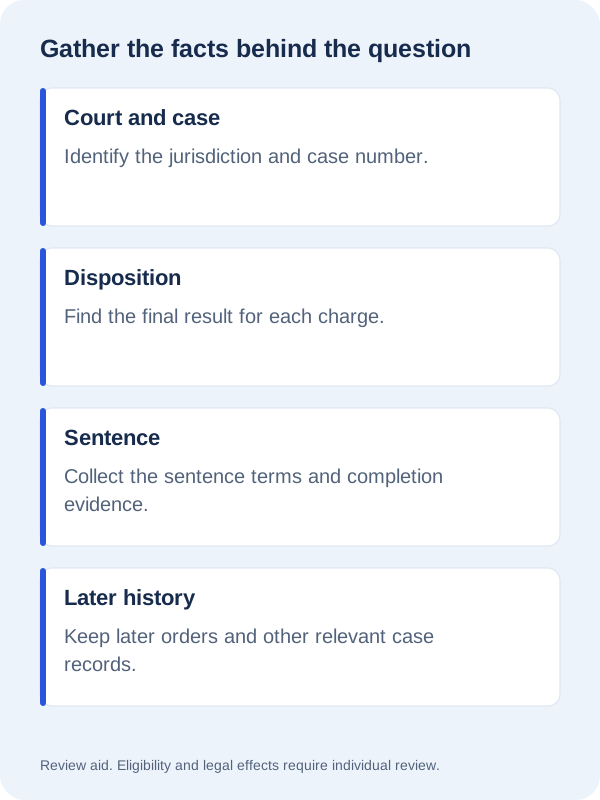
Read the diagram as text
- Court and case
- Identify the jurisdiction and case number.
- Disposition
- Find the final result for each charge.
- Sentence
- Collect the sentence terms and completion evidence.
- Later history
- Keep later orders and other relevant case records.
Common question
Can a website determine eligibility from my charge name?
A charge name alone leaves important facts unresolved. Use the disposition, sentence documents and relevant history to support a review.
Official resources
Consult the issuing authority for current forms and local procedure.
- Utah Courts conviction reduction guidancewww.utcourts.gov
- Utah Courts adult expungement guidancewww.utcourts.gov
- New Jersey Courts: expungement packetwww.njcourts.gov
- New Jersey Office of the Public Defender: expungement order processingwww.nj.gov