
Check the law and its start date
A proposed bill, enacted law and operational process are different stages. Use current information from the state authority responsible for implementation.
Check the record itself
Compare the official record with the category you believe applies. A law's general description may omit exclusions or the way agencies identify eligible cases.
Find the route for missing relief
Look for official instructions about a record that appears to qualify but remains visible. Keep the documents supporting your question and any responses from the responsible agency.
A way to organize your review
Gather the facts behind the question
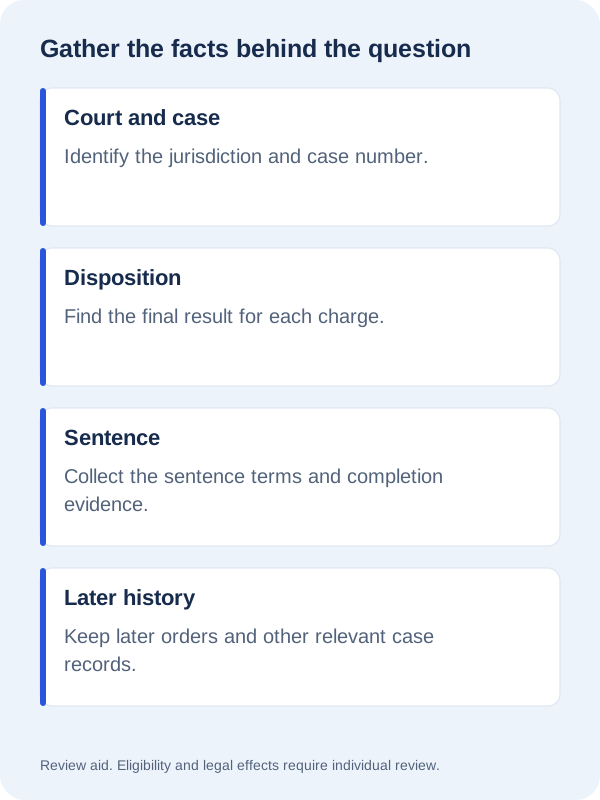
Read the diagram as text
- Court and case
- Identify the jurisdiction and case number.
- Disposition
- Find the final result for each charge.
- Sentence
- Collect the sentence terms and completion evidence.
- Later history
- Keep later orders and other relevant case records.
Common question
Does Clean Slate mean every conviction is cleared?
No. Each law defines its covered records and conditions. Check the current state rules and the status of your case.
Official resources
Consult the issuing authority for current forms and local procedure.
- Michigan State Police: Clean Slate and set-asideswww.michigan.gov
- Connecticut — Clean Slate eligibilityportal.ct.gov
- Pennsylvania Legislature — Criminal history chapter 91www.legis.state.pa.us