
Resolve missing information first
Get the final disposition and sentence documents before selecting a form. Record discrepancies between the court file and background report so they can be reviewed.
Follow the filing instructions
Check the proper court or agency, required attachments, fees or waivers, and notice requirements. Use the current form from the issuing authority. A packet from another county may not fit your case.
Follow the case through the order
Keep filed copies, notices and the final decision. If relief is granted, check which agencies must update their records. Retain a certified order when the process calls for one.
A way to organize your review
Gather the facts behind the question
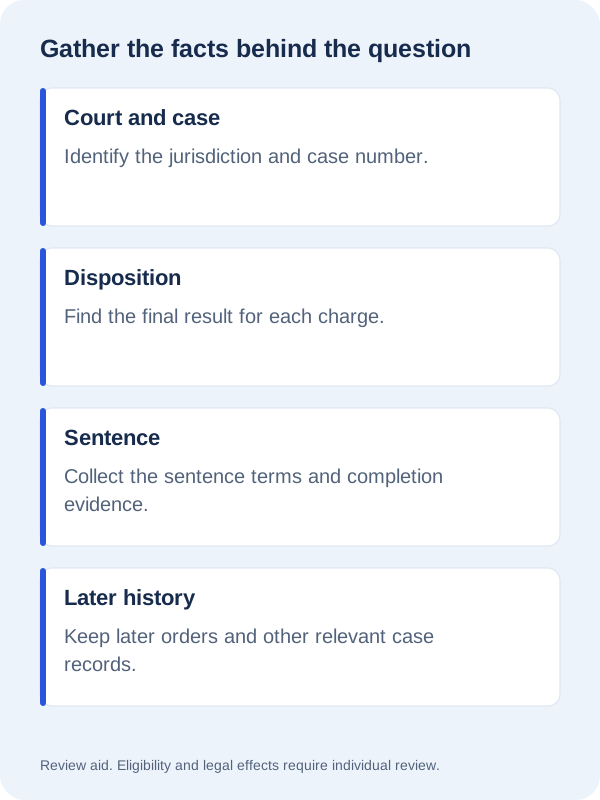
Read the diagram as text
- Court and case
- Identify the jurisdiction and case number.
- Disposition
- Find the final result for each charge.
- Sentence
- Collect the sentence terms and completion evidence.
- Later history
- Keep later orders and other relevant case records.
Common question
Does submitting a form mean the record is cleared?
A filing begins or advances a process. Verify the decision and any required record updates before relying on relief.
Official resources
Consult the issuing authority for current forms and local procedure.
- Utah Courts conviction reduction guidancewww.utcourts.gov
- Utah Courts adult expungement guidancewww.utcourts.gov
- New Jersey Courts: expungement packetwww.njcourts.gov
- New Jersey Office of the Public Defender: expungement order processingwww.nj.gov