
Find the event that starts the clock
Depending on the route, a relevant date might be the disposition or completion of part of a sentence. Use the governing rule and supporting record. Do not substitute the arrest date because it is easier to find.
Ask about current processing
Court workload, notice, objections and missing documents can affect an application. Request current procedural information from the responsible court or agency. Avoid treating an online anecdote as a deadline.
Allow for record updates
A signed order may be followed by agency processing. Keep the order, track required distribution and check the records that matter for your intended use.
A way to organize your review
Build a timeline from documents
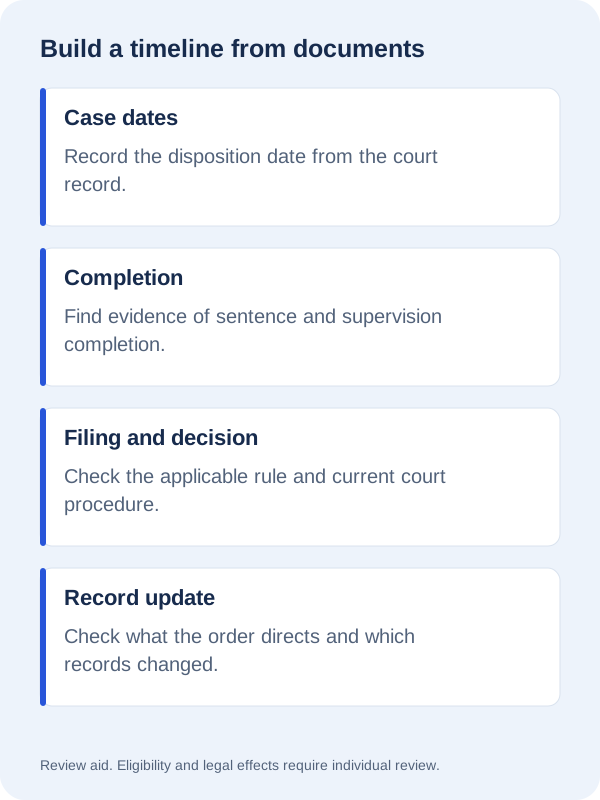
Read the diagram as text
- Case dates
- Record the disposition date from the court record.
- Completion
- Find evidence of sentence and supervision completion.
- Filing and decision
- Check the applicable rule and current court procedure.
- Record update
- Check what the order directs and which records changed.
Common question
Can I use a national waiting-period calculator?
Only a calculation tied to the right remedy and verified dates is useful. Missing or disputed dates should remain unresolved.
Official resources
Consult the issuing authority for current forms and local procedure.
- Utah Courts conviction reduction guidancewww.utcourts.gov
- Utah Courts adult expungement guidancewww.utcourts.gov
- North Carolina Judicial Branch: expunctions and formswww.nccourts.gov