
Identify the authority
For a state case, look for that state's clemency authority and court record-relief procedures. Federal pardon information applies to federal offenses; it does not establish a state process.
Separate record access from other effects
List the problem you are trying to address before selecting a remedy. Record visibility, rights and collateral consequences require separate questions. The effect of a pardon must be checked under the law that applies to each question.
Keep earlier orders
If you already received a pardon or another form of relief, obtain the document. A reviewer needs its wording and date to assess whether another application is available or useful.
A way to organize your review
Define the record-access question
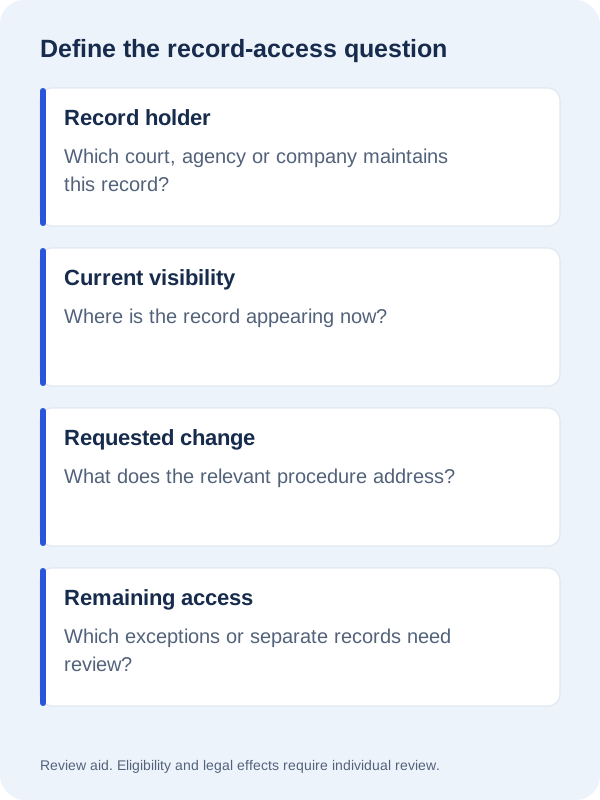
Read the diagram as text
- Record holder
- Which court, agency or company maintains this record?
- Current visibility
- Where is the record appearing now?
- Requested change
- What does the relevant procedure address?
- Remaining access
- Which exceptions or separate records need review?
Common question
Does a federal pardon expunge a conviction?
The Department of Justice explains that a federal pardon does not erase the conviction record. State remedies must be checked separately.
Official resources
Consult the issuing authority for current forms and local procedure.
- ALEA — Criminal record expungementwww.alea.gov
- Additional official guidancewww.justice.gov