
Compare the effect, not just the name
Write down the result you need: limiting public access, correcting a record, changing a conviction or addressing a specific application. Then compare the remedies in the case state against that need.
Check which records are covered
A court docket and a criminal-history repository are different records. An order may require separate handling by each agency. Keep the signed order and confirm which agencies received it.
Read the exceptions
A rule about public searches may contain exceptions for particular agencies, proceedings or regulated work. Ask about the exact disclosure question in front of you. Do not rely on a broad claim that a sealed record can never be seen.
A way to organize your review
Define the record-access question
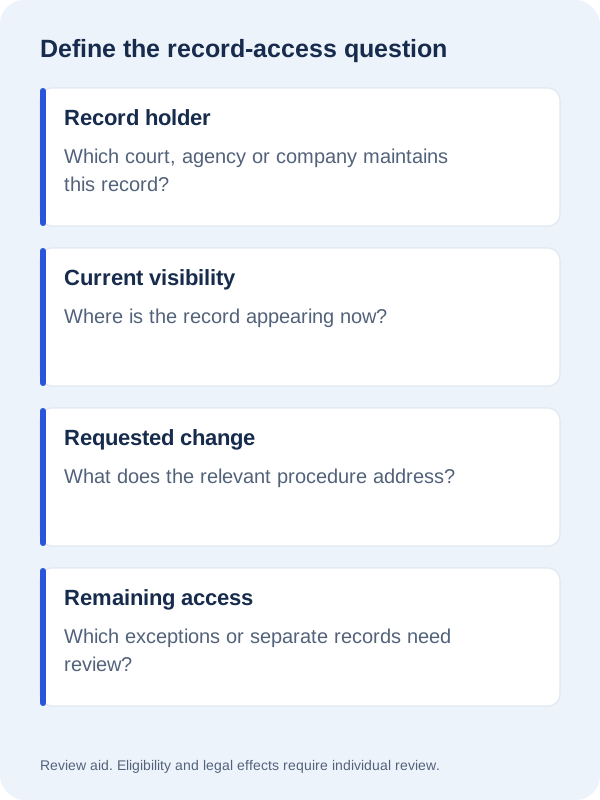
Read the diagram as text
- Record holder
- Which court, agency or company maintains this record?
- Current visibility
- Where is the record appearing now?
- Requested change
- What does the relevant procedure address?
- Remaining access
- Which exceptions or separate records need review?
Common question
Can I choose whichever remedy sounds stronger?
Availability depends on the case and the statute. Compare the actual requirements and effects before choosing an application.
Official resources
Consult the issuing authority for current forms and local procedure.
- Texas State Law Library: Expunctions and nondisclosureguides.sll.texas.gov
- Florida Department of Law Enforcement: sealing and expungement questionswww.fdle.state.fl.us