
Ask what the appointment covers
A clinic may offer screening, paperwork help or representation. Ask which service is available, what records to bring and whether there are income or geographic limits.
Prepare a short case list
List the courts and case numbers you know. Bring dispositions and prior relief orders if you have them. Explain missing records so the appointment can address them.
Check the provider
Use the court's help directory, a recognized legal-aid organization or a state bar referral resource. Verify a lawyer's license through the appropriate bar before hiring.
A way to organize your review
Gather the facts behind the question
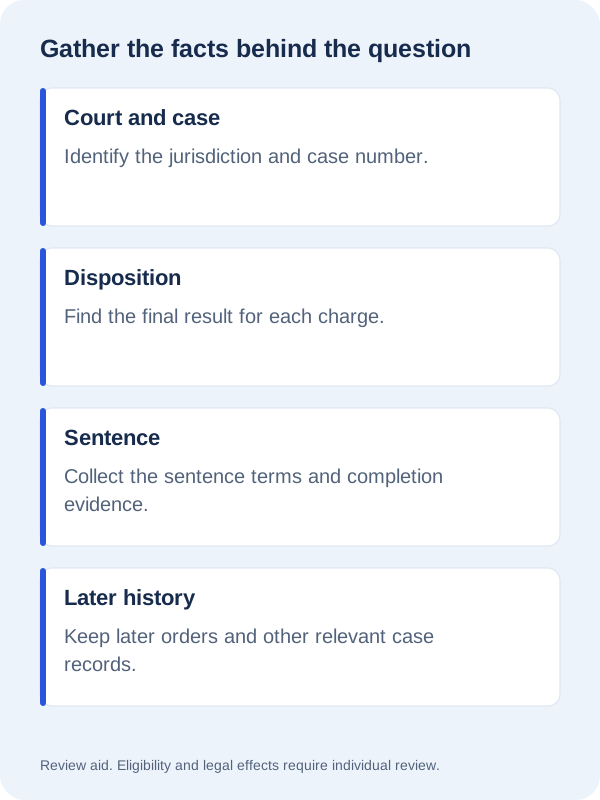
Read the diagram as text
- Court and case
- Identify the jurisdiction and case number.
- Disposition
- Find the final result for each charge.
- Sentence
- Collect the sentence terms and completion evidence.
- Later history
- Keep later orders and other relevant case records.
Common question
Does free help include all filing costs?
Ask the provider. Assistance, court charges and fee-waiver eligibility are separate parts of the budget.
Official resources
Consult the issuing authority for current forms and local procedure.
- North Carolina Judicial Branch: expunctions and formswww.nccourts.gov
- Utah Courts conviction reduction guidancewww.utcourts.gov
- Utah Courts adult expungement guidancewww.utcourts.gov
- Additional official guidancewww.lsc.gov