
Documents and facts to review
Bring the judgment, statutory offense and sentencing documents. Preserve probation records and later orders. Ask a qualified reviewer to distinguish section 17(b) from Proposition 47 and dismissal procedures.
The next question
If a reduction is granted, retain the order and review any separate dismissal or record-access question. Reduction alone is not a promise that the case disappears.
Keep the outcome and record together
Save the judgment, final disposition and any later order in the same case packet. A background report can help identify a problem, but it may not contain the documents needed to resolve it. Record unknown facts and ask for the missing material before relying on an eligibility conclusion.
A way to organize your review
Questions to keep separate
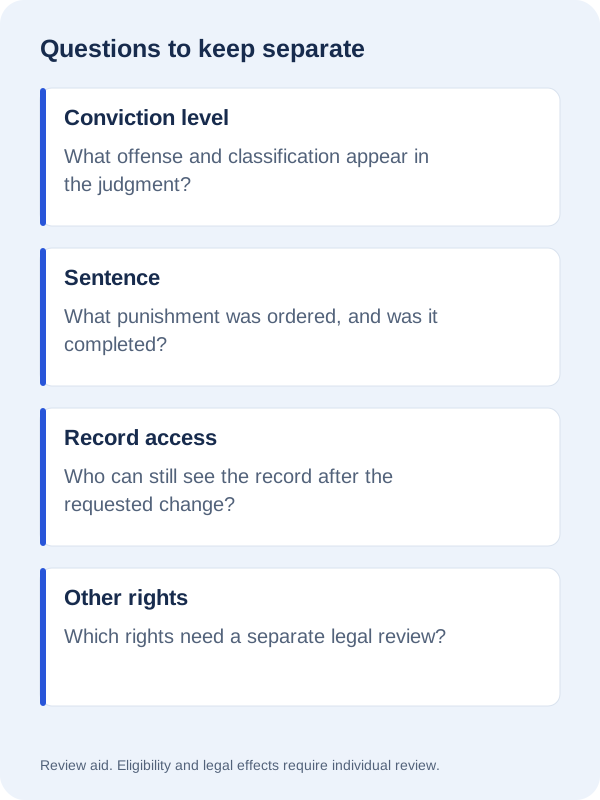
Read the diagram as text
- Conviction level
- What offense and classification appear in the judgment?
- Sentence
- What punishment was ordered, and was it completed?
- Record access
- Who can still see the record after the requested change?
- Other rights
- Which rights need a separate legal review?
Common question
What should I verify before using a form?
Match the form to the court, case outcome and requested remedy. Use the issuing authority's current instructions for attachments, fees and filing procedure; a general guide cannot establish eligibility.
Official resources
Consult the issuing authority for current forms and local procedure.
- California Courts — Record-cleaning indexwww.selfhelp.courts.ca.gov
- California Courts — Felony convictions and Proposition 47www.selfhelp.courts.ca.gov
- California Penal Code section 17leginfo.legislature.ca.gov