
Documents and facts to review
Check the court's current filing instructions, required notices and treatment of multiple cases. Keep copies of submissions and any request for additional information.
The next question
After a decision, retain the order and follow the instructions for record updates. Filing confirmation is not a grant of relief.
Keep the outcome and record together
Save the judgment, final disposition and any later order in the same case packet. A background report can help identify a problem, but it may not contain the documents needed to resolve it. Record unknown facts and ask for the missing material before relying on an eligibility conclusion.
A way to organize your review
Gather the facts behind the question
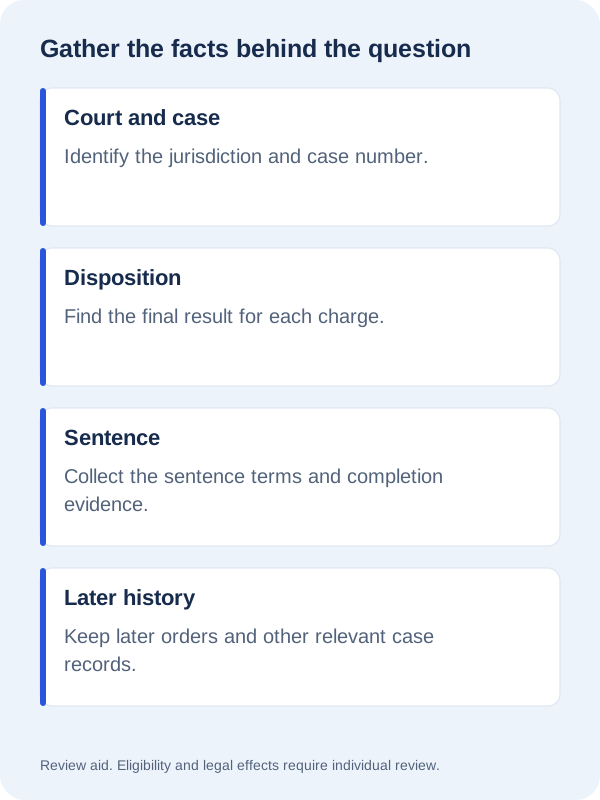
Read the diagram as text
- Court and case
- Identify the jurisdiction and case number.
- Disposition
- Find the final result for each charge.
- Sentence
- Collect the sentence terms and completion evidence.
- Later history
- Keep later orders and other relevant case records.
Common question
What should I verify before using a form?
Match the form to the court, case outcome and requested remedy. Use the issuing authority's current instructions for attachments, fees and filing procedure; a general guide cannot establish eligibility.
Official resources
Consult the issuing authority for current forms and local procedure.